If you detect a sulfurous, rotten-egg gas odor, hear a hissing noise near a gas line, or suspect an active gas leak, evacuate the premises immediately. Do NOT operate electrical switches, do NOT use landline or mobile phones inside the unit, and do NOT light matches or candles. Once you are in a safe outdoor location away from the building, call 911 or the local gas utility (Con Edison) immediately. Never attempt to troubleshoot a suspected gas leak yourself.
Professional Gas Piping Services in Parkchester, Bronx
Natural gas powers domestic stoves, laundry dryers, water heaters, and heating boilers throughout Parkchester, Bronx. Because combustible natural gas operates under constant distribution pressure, any compromise to black iron pipe joints, shutoff cocks, or flexible appliance connectors poses severe life-safety and fire hazards. Adhering to the stringent New York City Fuel Gas Code, all gas work requires meticulous care, certified tooling, and formal regulatory compliance.
At NY Plumbing, our technicians provide skilled gas line repair Parkchester Bronx services. From non-emergency gas piping inspection Parkchester Bronx evaluations to professional gas line installation for stove Parkchester Bronx hookups, we deliver absolute precision and safety for residential properties.
Common Gas Line Problems and Maintenance Concerns
Over years of continuous residential service, gas piping systems can experience degradation from environmental conditions and physical wear:
- Corrosion on Exposed Piping: Damp basement environments or unconditioned utility chases causing atmospheric rust scaling on black iron gas lines.
- Worn or Seized Gas Shutoff Valves: Vintage brass plug valves drying out, binding, or leaking gas across valve packing stems.
- Improper Appliance Connectors: Outdated, kinked, or unapproved flexible gas connectors connecting kitchen ranges or dryers.
- Loose Threaded Joints: Building settling or structural vibration over time loosening pipe joints sealed with obsolete pipe compounds.
- Post-Renovation Pressure Drops: Unauthorized or improperly sized piping additions restricting volume to downstream equipment like water heaters or boilers.
NYC Local Law 152: Gas Piping Periodic Inspections
Under New York City Local Law 152, covered buildings (including multi-family apartment buildings and co-ops with more than two residential units) must undergo periodic inspections of exposed gas piping once every four years. Inspections must be performed by a qualified licensed master plumber. During an inspection, all exposed gas piping from building point-of-entry service rooms through public hallways, corridors, and boiler rooms is evaluated for active leaks, severe corrosion, unapproved connections, and code compliance. We assist property managers in navigating necessary repairs and filing requirements.
Our Inspection and Repair Protocol
Safe gas line servicing follows an exacting, methodical standard:
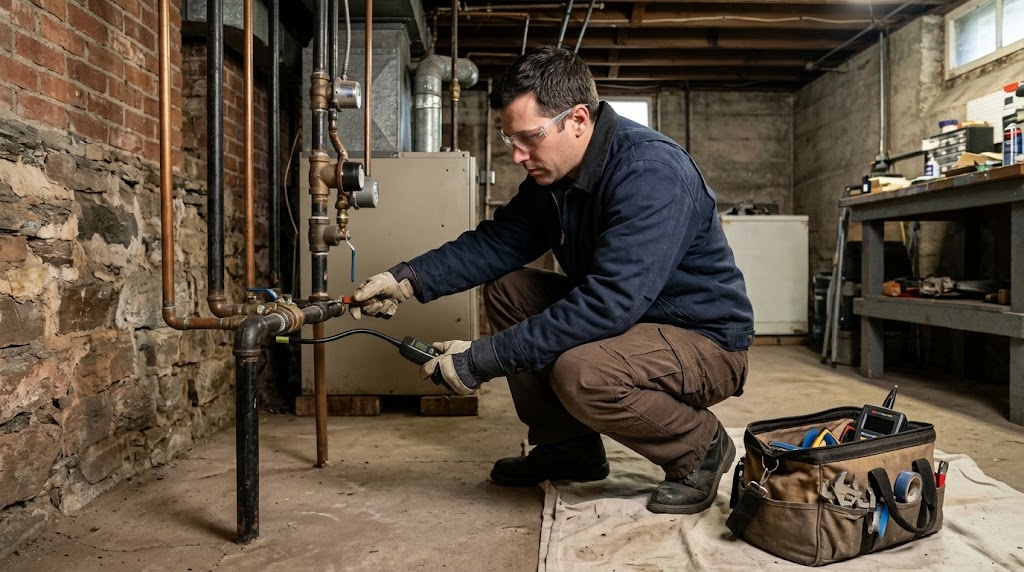
1. Electronic Sniffing & Acoustic Verification: Technicians utilize calibrated solid-state combustible gas detectors sensitive to parts-per-million concentrations to verify suspected joints.
2. Micro-Bubble Leak Detection: Suspect fittings are tested with non-corrosive foaming solution to visually identify microscopic joint leakage.
3. Hydrostatic & Pneumatic Pressure Testing: When repairing lines or restoring utility service following a shutoff, piping is isolated and subjected to code-required gauge pressure tests to ensure zero drop over the specified test duration.
4. Approved Black Steel Fitting Installation: Compromised sections are cut out and replaced using heavy-duty Schedule 40 black steel piping with approved malleable iron fittings and gas-rated sealant.
5. Appliance Hookup & Draft Verification: After restoring gas, burners and pilots are tested for clean blue combustion flame patterns, and exhaust drafting is verified.
Repair Factors and Cost Considerations
Gas piping repairs involve rigorous safety testing and regulatory adherence. Factors shaping project requirements include:
- Accessibility of the Line: Exposed gas pipework in basement utility rooms is more accessible than lines routed through finished wall shafts.
- Line Length and Diameter: Main building distribution manifolds require larger pipe stock and heavier threading equipment than single-appliance branch lines.
- Utility Coordination & Permitting: Situations involving utility meter lockouts or Con Edison restoration require formal DOB permitting, pressure tests, and utility sign-offs.
For related plumbing concerns affecting shared utility risers, our team also provides expert pipe leak repair and full building repiping consultations.
Frequently Asked Questions About Gas Line Repair & Inspection
Consult With Our Parkchester Gas Piping Team
Schedule non-emergency gas piping inspections, appliance hookups, or code compliance testing with our qualified technicians.
📞 Call (315) 202-8009