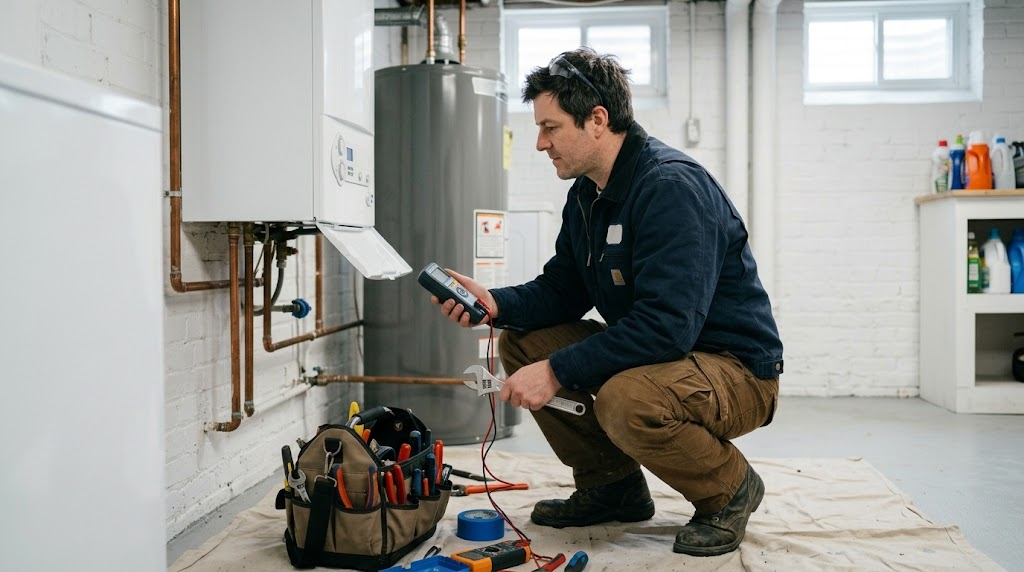
Expert Boiler Repair in Parkchester, Bronx
Winter temperatures in New York City place intense operational demands on residential heating infrastructure. Across the historic residential brick buildings and private homes of Parkchester, Bronx, reliable heating relies on central steam boilers and hydronic hot-water systems. When heating equipment malfunctions during freezing weather, residential comfort and indoor pipe safety are immediately at risk.
At NY Plumbing, our heating technicians specialize in boiler repair Parkchester Bronx properties depend on. Whether addressing an urgent no heat boiler repair Parkchester Bronx crisis, diagnosing a complex steam boiler repair Parkchester Bronx radiator knocking issue, or servicing a modern gas boiler repair Parkchester Bronx installation, we provide prompt, code-compliant mechanical solutions.
Understanding Steam vs. Hydronic Heating in Parkchester
Properties in the Parkchester area utilize two distinct central boiler architectures:
Steam Heating Systems: Prevalent in many classic multi-family buildings. A steam boiler boils water in a cast-iron vessel, creating steam that rises under low pressure through vertical risers to cast-iron radiators. Air vents open to release air, then close when hot steam reaches them. As steam releases heat into the room, it condenses back into liquid water and drains by gravity back to the boiler through single-pipe or two-pipe return lines.
Hydronic (Hot Water) Boilers: More common in renovated properties and single-family dwellings. In a hot water boiler repair Parkchester Bronx system, water is heated without boiling and continuously circulated through baseboard convectors or radiant loops by mechanical circulator pumps, governed by multi-zone valves and aquastat controls.
Warning Signs of Boiler Failure
Boilers exhibit distinct physical symptoms before completely shutting down:
- Sudden No-Heat Condition: Burners failing to fire despite thermostat calls, leaving the boiler not working Parkchester Bronx residence without heat.
- Violent Banging or Hammering: Loud metallic clangs in steam pipes caused by trapped condensate meeting incoming high-speed steam.
- Water Leaking Around Boiler Vessel: Moisture weeping from sectional gaskets, piping manifolds, or pressure relief valves.
- Fluctuating Gauge Glasses: Steam boiler sight glasses displaying surging, foaming, or muddy water levels, indicating severe internal water contamination.
- Persistent Low Water Cutoff Lockouts: Automated safety switches shutting down burners due to erratic water supply or float chamber sludge.
- Radiators Cold at Far Ends of System: Defective steam radiator air vents or failing hydronic zone circulators preventing heat distribution.
Step-by-Step Diagnostic and Repair Protocol
Our heating technicians follow a rigorous inspection sequence to identify faults accurately:
1. Safety Interlock & Water Level Verification: We check the low-water cutoff (LWCO), automated water feeder, and sight glass level. Operating a boiler without adequate water poses severe explosion hazards.
2. Gas Train & Combustion Inspection: We verify gas supply pressures, inspect pilot burners or electronic spark igniters, flame sensors, and exhaust draft conditions. For gas line concerns, we consult our gas line repair team.
3. Operating Controls & Pressure Limit Switches: We calibrate the pressuretrol on steam boilers (keeping operating pressure below 2 PSI for optimal efficiency) or check the high-limit aquastat on hydronic systems.
4. Distribution Components: For steam systems, we evaluate main vent operation and radiator valves. For hot-water systems, we test circulator pump amp draws, check expansion tanks, and purge air-bound baseboard loops.
5. Vessel Integrity Check: We inspect cast-iron sections for thermal cracking or joint leaks. If external supply lines or water make-up lines are leaking, we coordinate with our pipe leak repair specialists.
Repairing Existing Boilers vs. System Replacement
Evaluating whether to repair an existing heating boiler or recommend complete unit replacement depends on vessel integrity:
When Repair Is Appropriate: If the cast-iron heat exchanger vessel is sound and free of structural fractures, replacing external controls—such as aquastats, pressuretrols, automatic water feeders, circulator pumps, zone valves, or gas valves—restores efficient heating at a fraction of replacement cost.
When Replacement Is Unavoidable: If internal cast-iron heat exchanger sections are cracked, rusted through, or leaking combustion gases into living spaces, the boiler must be replaced immediately. Continued operation of a cracked boiler poses fatal carbon monoxide and flood risks.
Cost Factors in Boiler Service
Heating repair costs depend on objective technical parameters:
- System Type: Steam heating diagnostics require different specialized testing compared to closed-loop hydronic circulation.
- Component Availability: Modern electronic control boards and specialized commercial steam valves vary in sourcing requirements.
- Piping Modifications: Correcting improperly pitched steam return headers or repiping leaking water feed lines requires specialized pipe-fitting labor.
Emergency Heating Response & Safety Protocol
If your boiler is discharging high-pressure steam through its safety relief valve, making roaring combustion noises, or leaking exhaust fumes, shut off the boiler power switch immediately. In the event of persistent moisture pooling around the boiler room, review our leak detection service to ensure water is not entering from subterranean foundations or concealed building risers.
Frequently Asked Questions About Parkchester Boiler Repair
Need Boiler Repair in Parkchester, Bronx?
Speak directly with our experienced heating technicians to troubleshoot no-heat issues, noisy radiators, and boiler safety controls.
📞 Call (315) 202-8009